
Introduction
WordPress powers millions of websites worldwide, which also makes it a common target for hackers.
The good news is that most WordPress hacks happen because of simple security mistakes. By following a few basic practices, you can protect your website and keep it safe.
This beginner-friendly guide will show you simple ways to improve your WordPress security.
Why WordPress Security Is Important
If your website gets hacked, it can lead to serious problems such as:
-
Website downtime
-
Stolen data
-
Malware infections
-
Google blacklisting your site
-
Loss of visitors and trust
Securing your WordPress website helps prevent these issues.
1. Keep WordPress Updated
One of the easiest ways to protect your website is keeping everything updated.
Always update:
-
WordPress core
-
Plugins
-
Themes
Updates often include security patches that protect against known vulnerabilities.
2. Use Strong Passwords
Weak passwords make it easy for hackers to access your site.
Use passwords that include:
-
Uppercase letters
-
Lowercase letters
-
Numbers
-
Symbols
Also avoid using simple passwords like:
password
123456
Using a password manager can help generate secure passwords.
3. Change the Default Admin Username
Many attackers try logging in using the default username admin.
If your admin username is still “admin”, consider creating a new administrator account and deleting the old one.
This simple change can block many automated attacks.
4. Install a WordPress Security Plugin
Security plugins add an extra layer of protection.
They can help with:
-
Malware scanning
-
Firewall protection
-
Login attempt limits
-
Security alerts
Choose a reliable security plugin and keep it updated.
5. Limit Login Attempts
Hackers often use brute force attacks to guess your password.
Limiting login attempts prevents unlimited login tries.
For example:
-
Allow only 3–5 failed login attempts
-
Temporarily block the IP address afterward
This helps stop automated attacks.
6. Enable Two-Factor Authentication
Two-factor authentication (2FA) adds another security step when logging in.
Instead of only entering a password, you also need a verification code from your phone.
This makes it much harder for hackers to access your account.
7. Use Secure Hosting
Your hosting provider plays a big role in website security.
Choose hosting that offers:
-
Regular server updates
-
Malware protection
-
Firewall security
-
Daily backups
Good hosting adds another layer of protection.
8. Backup Your Website Regularly
Backups are essential for recovering from security problems.
If something goes wrong, you can restore your website quickly.
Best practice:
-
Take automatic daily backups
-
Store backups in a secure location
Backups act as your safety net.
9. Remove Unused Plugins and Themes
Unused plugins and themes can create security risks.
Delete anything you’re not using.
Also avoid installing plugins from untrusted sources.
10. Use HTTPS (SSL Certificate)
An SSL certificate encrypts data between your website and visitors.
Benefits include:
-
Improved security
-
Better trust with visitors
-
Improved search rankings
Most hosting providers offer free SSL certificates.
11. Monitor Your Website Activity
Monitoring your website helps detect suspicious behavior early.
Watch for:
-
Unknown login attempts
-
New users you didn’t create
-
Unexpected file changes
Catching problems early can prevent bigger issues.
Final
WordPress security doesn’t have to be complicated. Most websites can stay safe by following a few basic practices.
To recap:
-
Keep WordPress updated
-
Use strong passwords
-
Install a security plugin
-
Limit login attempts
-
Enable backups
Taking these steps will significantly reduce the chances of your website being hacked.
Protecting your website today can save you a lot of trouble in the future.
Final Thoughts
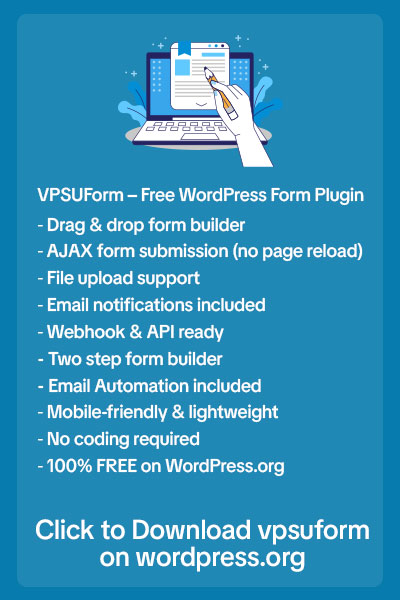
If you want a fast, reliable, and easy-to-use contact form plugin, VPSUForm is the clear choice. Build unlimited types of forms – contact, booking, feedback, surveys – with minimal effort.
👉 Download VPSUForm today and get started
👉 Learn more about VPSUForm’s powerful features here